
From Poverty to Prosperity
Lessons from China
By Gopal Khanal, PhD
Chairman, Innovate Research Foundation, Nepal*

My recent nine-day visit to China (3–12 July 2026), as a member of an international delegation participating in the seminar “Xi Jinping Thought on Socialism with Chinese Characteristics for a New Era and Its Relevance to the World,” was an experience that extended far beyond the conference hall. The programme included visits to Gansu Province and the Ningxia Hui Autonomous Region, offering a unique opportunity to observe China’s development journey at the grassroots level.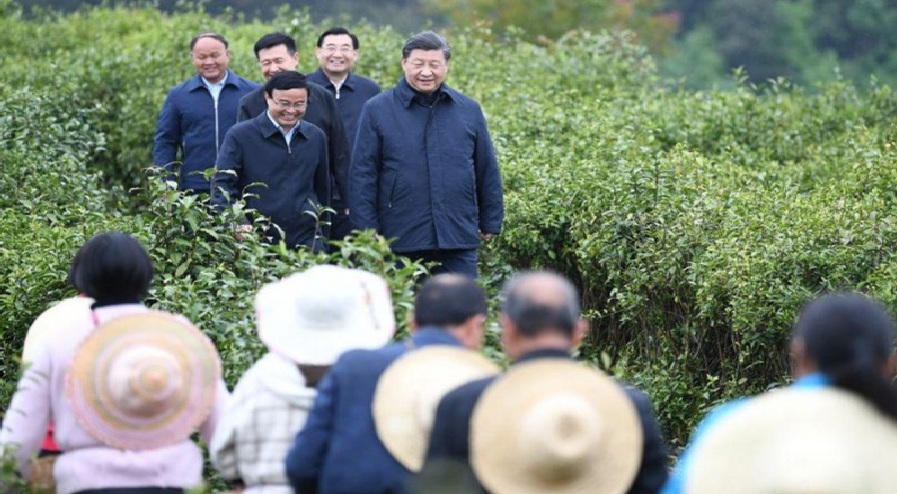
It provided a firsthand understanding of one of the most remarkable poverty reduction achievements in modern history. As I travelled through villages and counties such as Bulenggou, Hongde and Minning, that were once among China’s poorest regions, I witnessed communities that had been transformed by modern infrastructure, vibrant local industries, quality public services, and renewed hope.
For decades, Gansu and Ningxia symbolised the challenges of rural poverty. Harsh geography, limited natural resources, and inadequate connectivity had constrained development. Today, however, visitors encounter paved roads connecting remote settlements, clean and well-planned villages, schools and health centres within easy reach, flourishing agricultural enterprises, and growing tourism. The transformation is visible not only in physical infrastructure but also in the confidence and optimism of the people.
China’s success in eradicating extreme poverty did not occur by chance. It was the result of strong political commitment, long-term planning, and effective implementation under the leadership of the Communist Party of China (CPC). Since the 18th National Congress of the CPC in 2012, poverty alleviation became a national priority under President Xi Jinping. The campaign was driven by the conviction that no region or community should be left behind on China’s path towards modernization.
One of the defining features of China’s approach was its strategy of targeted poverty alleviation. Rather than relying on broad national programmes alone, the government identified poor households individually, assessed the specific causes of their poverty, and designed tailored interventions. General Secretary Xi Jinping himself visited these improverished counties and villages to take stock of the situation. Some families received support to develop agriculture or animal husbandry, while others benefited from vocational training, small-business assistance, employment opportunities, relocation from environmentally fragile areas, or improved access to education and healthcare. Poverty reduction was therefore not treated as a one-size-fits-all programme but as a carefully targeted national mission.
Equally important was the country’s coordinated governance system. Poverty eradication involved close cooperation between the central government, provincial authorities, county administrations, and village-level organisations. Each level had clearly defined responsibilities and measurable targets. Officials were evaluated not merely on economic growth but also on their ability to improve people’s livelihoods. This combination of political accountability and administrative coordination helped ensure that national policies were effectively implemented at the grassroots level.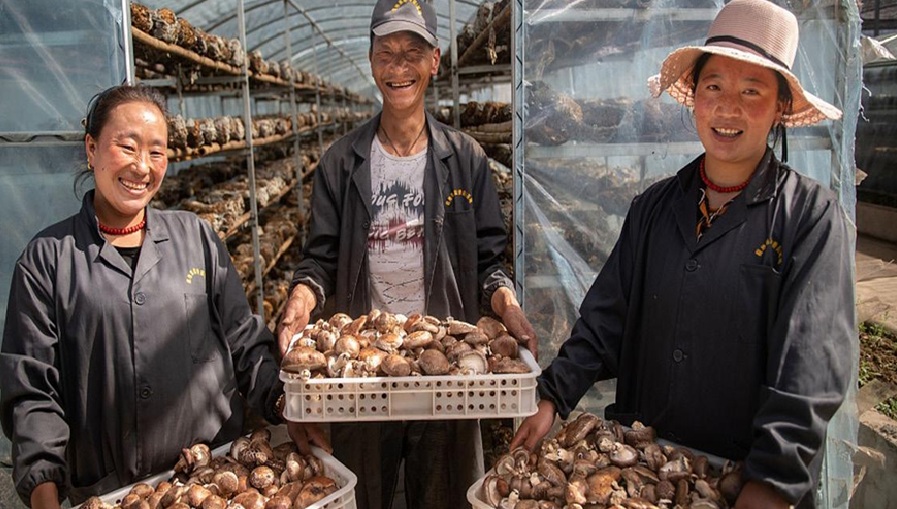
Infrastructure development also played a transformative role. During my visit, I observed how modern highways, rural roads, irrigation systems, internet connectivity, and public facilities had fundamentally changed the economic prospects of previously isolated communities. Better connectivity enabled farmers to access markets, attract investment, develop rural tourism, and integrate local products into national supply chains.
Another striking feature was the emphasis on industrial development suited to local conditions. Villages were encouraged to identify industries based on their comparative advantages-whether specialty agriculture, livestock, food processing, renewable energy, or cultural tourism. Economic development was therefore linked closely with local resources and community participation, creating sustainable sources of income rather than temporary assistance.
Education and healthcare were equally central to China’s poverty reduction strategy. Investments in schools, vocational education, medical insurance, and rural healthcare reduced the intergenerational transmission of poverty and improved human capital. Poverty alleviation was understood not simply as increasing income but as expanding people’s opportunities to lead better lives.
As an observer from Nepal, I found several lessons particularly relevant. China’s experience demonstrates that poverty reduction requires political commitment at the highest level, policy continuity, effective institutions, targeted interventions, and disciplined implementation. Economic growth alone is insufficient unless its benefits reach those living in remote and disadvantaged communities.
China announced in 2021 that it had eliminated extreme rural poverty after lifting nearly 100 million rural residents above the national poverty line over an eight-year campaign. While every country has its own political system and development path, the principles of strong leadership, clear national priorities, accountable governance, and people-centred development offer valuable insights for developing nations.
Walking through the revitalised villages of Gansu and Ningxia, I was reminded that poverty is not an inevitable condition. With vision, determination, sound policies, and sustained implementation, even the most disadvantaged communities can be transformed. China’s experience stands as one of the most significant development stories of our time and offers important lessons for countries seeking inclusive and sustainable development.
* Member, Department of Foreign Affairs, Communist Party of Nepal - Unified Marxist and Lenninist (CPN-UML)


