
China’s poverty alleviation
as model for rural development in Lao PDR.
By Dr. Inthavong

Poverty reduction is a global issue and challenge. Human society has never ceased to fight against poverty. China was once the developing country with the largest rural poor population in the world. Remarkable achievements have been made in China’s antipoverty program over the past decades, shaping a unique poverty reduction strategy with Chinese characteristics. The poverty alleviation and development in new China have undergone six stages, and experienced a transformation from relief-oriented to development-oriented poverty alleviation. The object of poverty alleviation has gradually targeted with a transformation from poor counties/areas to villages/households, and the effectiveness of poverty alleviation is also gradually improved. However, the increase in the difficulty of antipoverty, fragile ecological environment, rapid population aging and rural decline poses challenges to the construction of a well-off society in an all-round way in China. Specific antipoverty measures were put forward based on the investigation.How to use Chinese experiences to Laos for poverty alleviation.
1. Country profile
The Lao People’s Democratic Republic is a landlocked country in the mainland Southeast Asia with a total area of 236 800 km2 . The country is bordered by China to the north, Viet Nam to the east, Cambodia to the south, Thailand to the west and Myanmar to the northwest. The country stretches more than 1 700 km along a north-south axis. Some 80 percent of the country’s area is composed of hills and mountains. Laos is a country which rules by a revolutionary party called communism party. The Lao People’s Revolutionary Party (LPRP) holds a total monopoly on political power, operating under a constitution adopted in 1991.
State Structure: The National Assembly is elected every five years, which then selects the country’s president, vice president, and approves the prime minister
Foreign Relations: Laos maintains close strategic, political, and economic alliances with neighboring Vietnam and China, alongside active participation in regional groups like ASEAN. A large segment of the rural population remains engaged in subsistence and commercial agriculture, primarily cultivating rice, coffee, and cassava.
2. Characteristic of poverty in Laos.
The poverty is one of policy of the party, this year the government Laos has introduced the national strategy on poverty alleviation and rural development. The poverty has reduced its national poverty rate from 46% in 1993 to 15%, lifting over half a million people out of poverty over the past decade. However, challenges persist with rural vulnerabilities, malnutrition, and economic shocks.
The poor consist of three distinct groups requiring different interventions:
The first group (41 percent of the poor) consists of remote, low-educated, agricultural households who are predominantly ethnic minorities.
The second (45 percent) consists of better-connected but low-educated agricultural households.
The third group (14 percent) consists of households engaged mainly in low-productivity nonfarm activities, with education levels that are still low but higher than in the other two groups.
This group is most likely to be affected by pandemic-related shocks.
Learning Poverty Alleviation from China for Application in Laos
China’s experience in poverty alleviation provides valuable lessons that Laos can adapt to its own national conditions. Although the two countries differ in population, geography, and economic structure, several strategies used by China are relevant for reducing poverty and promoting sustainable development in Laos.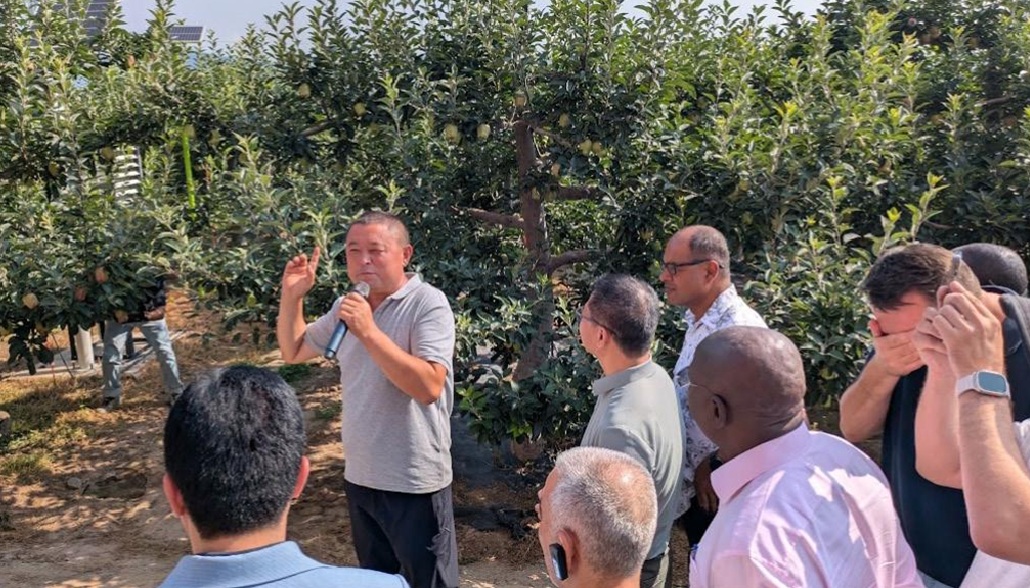
1. Strong Government Leadership
Establish clear national poverty reduction strategies with measurable targets.
Coordinate ministries, provincial authorities, and local communities to implement policies effectively.
Strengthen monitoring and evaluation to ensure transparency and accountability.
2. Targeted Poverty Alleviation
Identify poor households through accurate and regularly updated data.
Design assistance according to each family’s needs, such as agriculture, education, vocational training, or financial support.
Focus resources on the poorest and most disadvantaged areas.
3. Rural Infrastructure Development
Invest in roads, electricity, clean water, irrigation, schools, healthcare facilities, and internet access.
Improve transportation and communication to connect rural producers with markets.
4. Human Resource Development
Expand access to quality education and vocational training.
Improve healthcare services and nutrition.
Build the skills needed for employment in agriculture, industry, tourism, and services.
5. Agricultural Modernization
Promote commercial agriculture with improved technology and irrigation.
Encourage agricultural cooperatives and farmer organizations.
Support value-added processing and better market access for agricultural products.
6. Employment and Enterprise Development
Encourage small and medium-sized enterprises (SMEs).
Promote rural industries, handicrafts, ecotourism, and community-based businesses.
Create employment opportunities to increase household income.
7. Financial Inclusion
Improve access to affordable credit and microfinance for farmers and small businesses.
Encourage savings and responsible financial management.
Support entrepreneurship through suitable financial services.
8. Sustainable Natural Resource Management
Balance economic development with environmental protection.
Promote sustainable forestry, watershed management, and renewable energy.
Encourage climate-resilient agricultural practices.
9. Community Participation
Involve local communities in planning, implementation, and monitoring development projects.
Strengthen village organizations and encourage self-reliance.
Promote partnerships between government, businesses, and civil society.
10. Digital Technology and Innovation
Use digital platforms for agricultural extension, education, healthcare, and e-commerce.
Improve digital infrastructure to expand economic opportunities in rural areas.
Recommendations for Laos
To adapt China’s experience successfully, Laos could:
Develop a comprehensive, data-driven poverty reduction system.
Invest more in rural infrastructure and human capital.
Promote commercial agriculture and rural entrepreneurship.
Expand vocational training linked to labor market needs.
Improve access to finance for rural households and SMEs.
Strengthen cooperation among government agencies, development partners, and local communities.
Ensure that poverty reduction policies are environmentally sustainable and tailored to local conditions.
Conclusion
China’s poverty alleviation experience demonstrates that poverty reduction requires strong leadership, targeted policies, infrastructure investment, human resource development, and sustainable economic growth. By adapting these lessons to its own context, Laos can further reduce poverty, improve living standards, and achieve more inclusive and sustainable national development.


